


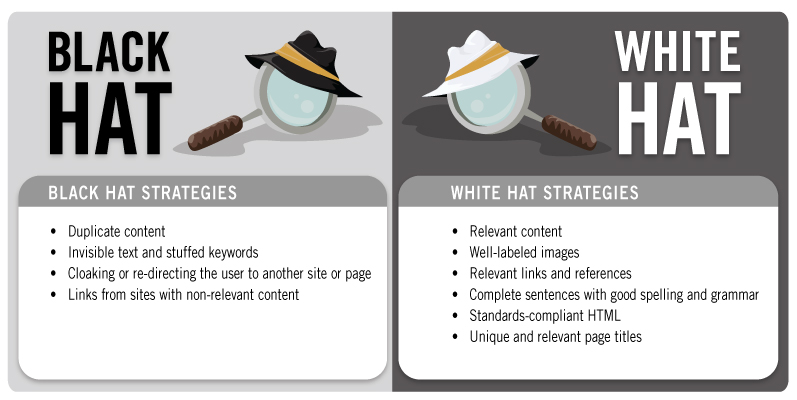
There are many ways that companies can be unethical in SEO and SEM. Also referred to as black hat and white hat, unethical and ethical respectively. For example, there is a practice of link building that can be taken advantage of and turned into a black hat practice. Like in the case with Overstock.com, in 2011 they were found out to have been offering discounts and paying students and staff of universities to plug their links into their .edu sites. Devaney, E. (2018) This boosted the pages ranking on Google due to the fact that .edu is respected and better recognized by Google. The problem with this is that the links were irrelevant to the .edu sites and caused a lot of confusion. They of course were found out and penalized for this action, losing over 1.5 billion dollars in reveneue to fines. Another style of “black hat” unethical practices in SEO and SEM is using doorway pages like in the case with BMW.de. They wanted to compete against oher companies using competitive keywords like “used car”, so they made a fake page that would then redirect the users to their parent page, BMW. Devaney, E. (2018) This causes confusion in search results and brings people to pages they are not interested in. Ethical ways to implement link building would involve only linking content, pages and keywords that are specifically relevant to your page and the content or products you offer. You can also ethically create seperate pages within your website to highlight different engaging content or products instead of taking over keywords using doorway pages to lead customers down a road of irrelevance.
Benefits to maintaining ethical practices in SEO and SEM include staying on Google’s good side. By following their user guidelines and rules they have set out, they will not penalize you as a business or page. With this you benefit as a brand and can continuously grow and eventually grow your way through the search ranks. You will benefit from having consistently working pages (while maintaining them of course), that are relevant to your customers, who will then engage happily with your pages and content. Optimus. (2013)
References
Devaney, E. (2018). The Biggest SEO Blunders of All Time. In HubSpot. https://blog.hubspot.com/marketing/biggest-seo-blunders
Optimus, . (2013). Ethical SEO vs. Unethical SEO. https://www.optimus01.co.za/ethical-seo-vs-unethical-seo/
Venugopal, M. (2013). Website Usability vs SEO: Which Is More Important?. https://www.singlegrain.com/seo/website-usability-vs-seo-which-is-more-important/
 ByBonnieSue
Well done!
LikeLike